What to Eat in Tokyo: Ramen, Sushi, Izakayas and Konbini
Nigiri sushi started life as fast food. Around the 1820s, street stalls in Edo (the old name of Tokyo) began pressing a slice of fish from the bay onto a ball of vinegared rice so workers could eat standing up, in two bites, and get back to work. Two centuries later the city that invented the snack has, for years, held more Michelin stars than any other city on the planet. Yet the best food lesson Tokyo teaches has nothing to do with stars: some of the most satisfying meals here cost less than a cinema ticket and come out of a vending machine, a basement food hall or a seven-seat counter under a railway bridge.
This guide covers what to eat, where, roughly how much you will pay and the few rules that save you from awkward moments.
Ramen: Buy a Ticket, Then Sit Down
Tokyo has thousands of ramen shops, and many of them work the same way. Just inside the door there is a ticket machine (shokkenki). You put in money, press the button for your bowl and extras, take the ticket and hand it to the cook. No menu talk, no bill at the end.
- Price: a standard bowl runs roughly ¥900 to ¥1,300, and an egg or extra chashu adds a couple of hundred yen.
- Cash: many older machines only take cash, often only ¥1,000 notes and coins. Newer ones accept IC cards like Suica. Carry some notes.
- Buttons: the top left button is usually the house specialty. If everything is in Japanese, that is a safe bet. Phone camera translation helps too.
- Styles to try: Tokyo-style shoyu (clear soy broth, the city's classic), rich pork tonkotsu, and tsukemen, where cold noodles come with a hot, thick dipping broth. Tsukemen was popularized in Tokyo in the 1950s.
- Etiquette: slurping is normal and keeps the noodles from burning your mouth. Eat fairly fast and leave when you are done: there is usually a queue.
Sushi: Three Budgets, Three Experiences
Conveyor belt (kaitenzushi). Invented in Osaka in 1958, now everywhere. Big chains like Sushiro or Kura Sushi take orders on a tablet and send plates by express lane. Simple plates start around ¥120 to ¥150, so a full meal for one can stay near ¥2,000. Great for a first night or for kids.
Standing and counter sushi. One level up, small counters near stations serve piece by piece, often for ¥3,000 to ¥5,000 a head. Lunch sets are the best deal of the day.
Omakase. The chef decides everything. Top counters easily pass ¥30,000 per person, and the famous ones are booked weeks or months ahead, often through hotel concierges or booking platforms. If you want one, plan it before you fly.
A few sushi rules: dip the fish side, not the rice, lightly in soy sauce; eating nigiri with your fingers is completely fine; and at a good counter the chef often brushes on sauce already, so taste first.
Tsukiji Outer Market and Toyosu
The wholesale market moved to Toyosu in 2018, but the Tsukiji Outer Market stayed, and it is still the best grazing walk in the city: tamagoyaki (sweet omelet) on a stick, grilled scallops, tuna bowls, fresh strawberries.
- When: go early, roughly 7 to 11 a.m. Many shops close by early afternoon.
- Closed: Sundays, public holidays and some Wednesdays. Check the market's official closure calendar before going.
- Toyosu is for the tuna auction, which you watch from a viewing gallery very early in the morning. The closer observation deck works by advance application. Verify the current rules on the official site.
Izakayas and Yokocho Alleys
An izakaya is a Japanese pub where food matters as much as drinks: yakitori, karaage (fried chicken), edamame, sashimi, grilled fish. Order a few dishes at a time and keep going. Say "toriaezu biiru" ("a beer for now") and you will sound like a local.
The one surprise: the otoshi. A small dish arrives that you did not order, and it shows up on the bill as a table charge, usually around ¥300 to ¥700 per person. It is not a scam, it is the custom. Some chains, like Torikizoku, skip it.
The best atmosphere is in the yokocho, narrow alleys of tiny bars:
- Omoide Yokocho (Shinjuku): born as a postwar black market next to the station, now a smoky lane of yakitori counters with four to ten seats each.
- Nonbei Yokocho (Shibuya): "Drunkard's Alley", a quieter row of tiny bars by the tracks.
- Golden Gai (Shinjuku): around 200 micro bars. Many charge a seat fee of roughly ¥500 to ¥1,500, posted at the door.
- Yurakucho (near Ginza): izakayas under the brick railway arches, full of office workers after 6 p.m.
Depachika: The Basement Food Hall
Go down to the basement of any big department store (Mitsukoshi, Takashimaya, Isetan) and you find the depachika: a food hall of bento boxes, tempura, perfect fruit, wagashi sweets and free samples. Buy a bento and eat it in a park.
The trick: in the last hour before closing, many counters put discount stickers on prepared food. The exact time changes by store, so ask or just watch for the stickers.
Konbini: Better Than It Has Any Right to Be
Japanese convenience stores (7-Eleven, FamilyMart, Lawson) are a legitimate food stop, not an emergency option.
- Onigiri: rice balls with salmon, tuna mayo or pickled plum, around ¥150 to ¥250. Pull tab 1, then the two sides, and the seaweed wraps itself.
- Egg sandwich, karaage, oden in winter, and hot drinks from a heated shelf.
- Breakfast for less than ¥700 is easy.
Small note: eating while walking is frowned upon. Eat next to the store or find a bench.
Cheap Classics Worth Trying
- Gyudon (beef rice bowl) at Yoshinoya, Sukiya or Matsuya: often around ¥500, ordered from a machine or tablet.
- Standing soba near stations: a hot bowl in five minutes for very little.
- Monjayaki in Tsukishima: a runny cousin of okonomiyaki, cooked on the griddle at your table.
- Asakusa street snacks: ningyo-yaki cakes on Nakamise street and melonpan. Then walk to Kappabashi, the kitchenware street where they sell the plastic food models you see in restaurant windows.
Rules That Matter
- No tipping. Ever. Leaving coins on the table often makes staff chase you to return them. Some upscale restaurants add a service charge of around 10%, and it will be on the bill.
- Prices include tax. Since 2021, displayed prices must include consumption tax, so what you see is what you pay (except the otoshi or service charge).
- Use the oshibori (wet towel) for your hands, not your face, in nicer places.
- Chopsticks: never stick them upright in rice and never pass food from chopsticks to chopsticks. Both are linked to funerals.
- Paying: take the bill to the register at the front. Saying "gochisousama deshita" when you leave is a nice touch.
- Queues: a line outside is the best review in Tokyo. Join it.
Explore Tokyo with Trevurs
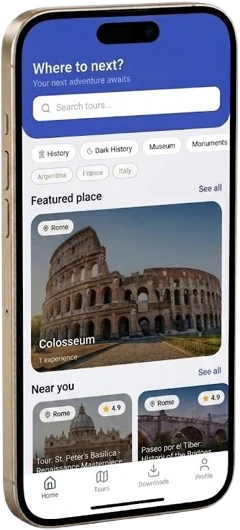
Food is the perfect excuse to walk the city, and the stories behind the streets make every snack taste better. Trevurs has free self-guided audio tours in Tokyo that work offline: "Edo: the City of a Million People Europe Didn't Know Existed" explains the city where nigiri was born as street food, "Asakusa: the District That Burned Twice and Opened Again on Monday" takes you through the neighborhood of Nakamise and Kappabashi, and "Akihabara: From Black-Market Radios to the Manga That Conquered the World" fits nicely before a ramen dinner. Download the app, put on your headphones and eat your way through the history.