Osaka Travel Guide: Dotonbori, the Castle and Japan's Kitchen
Osaka has a word for its own personality: kuidaore, "eat until you drop" (some translate it as "ruin yourself through food"). The old saying goes that Kyoto people go broke on clothes and Osaka people go broke on dinner. Spend one evening walking along the Dotonbori canal under the running Glico man, with a paper boat of takoyaki burning the roof of your mouth, and you will understand that the city takes the saying as a mission statement.
But Osaka is more than a food court with neon. It was a merchant capital when Tokyo was a fishing village, its castle was the stage for the battle that ended a century of civil war, and it sits 15 to 45 minutes by train from Kobe, Nara and Kyoto. Here is how to see it well.
Dotonbori: Neon, Canal and the Glico Man
Dotonbori began in 1612 as a canal dug by a merchant named Yasui Doton, who died in the siege of Osaka Castle before it was finished. His cousin completed it, and the street along its bank became the city's theater district. The kabuki houses are gone, but the showbiz never left.
- The Glico sign: the running man with raised arms has advertised a caramel brand from Ebisu Bridge since 1935. The current version is an LED screen, the sixth generation of the sign. Everyone takes the same photo from the bridge; copy the pose, it is practically mandatory.
- Kuidaore Taro: the drum-playing clown in a striped suit and round glasses has stood outside a restaurant here since 1949. The restaurant closed in 2008; Taro stayed.
- Giant food signs: a mechanical crab with moving legs (Kani Doraku), a huge pufferfish lantern, a dragon wrapped around a ramen shop. They are ads, but by now they are also landmarks.
- When to go: come after dark, around 7 p.m., when the neon reflects on the water. Walk the lower canal promenade (Tombori River Walk), which is calmer than the street above. A short canal cruise runs from the Don Quijote building with the yellow Ferris wheel.
What to Eat (and Where)
Osaka's classics are cheap, fast and eaten standing up more often than not.
- Takoyaki: octopus dumplings cooked in hemispherical iron pans. The commonly told story credits a stall owner named Endo Tomekichi with inventing them in 1935. Expect around ¥500 to ¥800 for 6 to 8 pieces. Let them cool: the inside is molten.
- Okonomiyaki: a savory pancake of cabbage, batter and pork or seafood, grilled on a hot plate at your table. The Osaka style mixes everything together (unlike Hiroshima, which layers it).
- Kushikatsu: deep-fried skewers of meat, vegetables and cheese. The rule printed on every counter in Shinsekai: no double dipping in the shared sauce. Use the cabbage leaves to scoop extra.
- Kitsune udon: udon with a sweet fried tofu pouch on top. Osaka claims it too.
- Kuromon Market: a covered market about ten minutes' walk from Dotonbori. Great for grilled scallops, wagyu skewers and fruit, though prices are tuned for tourists. Go in the morning; many stalls close by late afternoon.
Budget tip: a full street-food dinner in Dotonbori can cost under ¥2,500 if you share and graze. Sit-down okonomiyaki with a beer usually runs ¥1,500 to ¥2,500 per person.
Osaka Castle: the Peasant's Fortress
In 1583, Toyotomi Hideyoshi, a foot soldier's son who rose to unify Japan, began building the largest castle the country had ever seen, on the site of a fortified temple. After his death, the Tokugawa clan besieged it in 1614 and 1615 and burned it, ending the Toyotomi line. The Tokugawa rebuilt it, lightning burned it again, and the tower you see today is a 1931 reconstruction in reinforced concrete, paid for by public donations. Yes, it has an elevator.
- Tickets: the main tower costs ¥1,200 for adults since the 2025 price rise, and is open roughly 9:00 to 18:00 (last entry 30 minutes before; hours extend in some seasons). Check the official site before going.
- Worth it? The inside is a museum about Hideyoshi and the sieges, with a viewing deck on the eighth floor. If you are short on time, the park, the moats and the colossal stone walls are free and arguably more impressive than the interior. Look for the Tako-ishi, a single granite block estimated at over 100 tons.
- Getting there: Osakajokoen Station (JR Loop Line) or Tanimachi 4-chome (Metro). Allow two to three hours.
- Season: Nishinomaru Garden (small separate fee) fills with cherry blossoms in early April; the plum grove blooms in February.
Shinsekai and Tsutenkaku
Shinsekai ("New World") was laid out in 1912 on the grounds of the 1903 National Industrial Exhibition, modeled on Paris and Coney Island. Today it is a retro district of neon, kushikatsu counters and old arcades, with Tsutenkaku Tower (103 m) in the middle. Rub the feet of Billiken, the grinning god of "things as they ought to be", for luck. Observation deck prices changed in 2026 and sources disagree, so check before buying; it is included in the Osaka Amazing Pass.
Walk ten minutes south and you reach Abeno Harukas, Japan's tallest building from 2014 to 2023 at 300 m, with a much higher view.
Getting Around
- From Kansai Airport (KIX): the Nankai Rapi:t reaches Namba in about 40 minutes for roughly ¥1,400 to ¥1,700 depending on ticket type. The JR Haruka goes to Tennoji, Shin-Osaka and Kyoto.
- In the city: the Metro (Midosuji Line especially) plus the JR Loop Line cover almost everything. Use an IC card (ICOCA, or Suica/Pasmo from Tokyo) or your phone.
- Osaka Amazing Pass: about ¥3,500 for one day or ¥5,000 for two (2026 prices). It includes unlimited Metro and buses plus free entry to around 40 sights, including the castle tower, Tsutenkaku and the Dotonbori cruise. It pays off only if you visit three or four paid sights in a day.
- Where to stay: Namba for food and nightlife, Umeda (Osaka/Kita) for train connections and shopping, Shin-Osaka only if you are catching an early shinkansen.
How Many Days and What to Skip
Two full days covers Osaka: one for the castle and Shinsekai, one for Dotonbori, Kuromon and Umeda. Add more days to use the city as a base, since hotels are often cheaper than in Kyoto. Skip the queue-heavy chain restaurants you have seen on social media if the line is over 40 minutes: a stall two doors down is usually just as good. Skip Universal Studios Japan unless it is a priority; it eats a whole day and a big part of your budget.
Easy Day Trips: Nara and Kobe
- Nara: Kintetsu trains from Namba take about 40 minutes. Japan's first permanent capital, the Great Buddha of Todai-ji inside one of the largest wooden buildings in the world, and more than 1,000 deer that bow for crackers (and nip if you tease them).
- Kobe: JR Special Rapid from Osaka Station takes about 20 to 25 minutes. Harbor views, Kobe beef, the old foreign settlement of Kitano and the memorial to the 1995 earthquake that destroyed much of the city in twenty seconds.
- Kyoto: 15 minutes by shinkansen or under 30 by JR Special Rapid, but it deserves its own days.
Explore Osaka with Trevurs
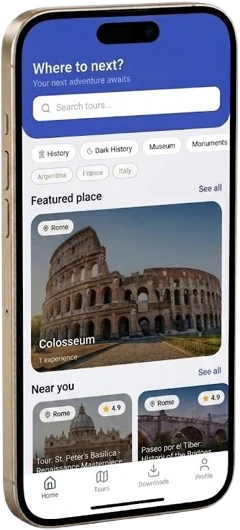
Before you dive into Dotonbori, walk the walls of the castle with "Osaka: the Castle of the Peasant Who Came to Rule Japan", the free Trevurs audio tour that tells how Hideyoshi went from sandal bearer to master of Japan and how his fortress fell. For your day trips, take "Nara: the First Capital, the Giant Buddha and the Deer Who Stayed" and "Kobe: the Twenty Seconds That Brought Down a City and the Years It Took to Rise Again". All Trevurs tours are free, self-guided and work offline, so you can follow them at your own pace and save your mobile data for finding the next takoyaki stall.