New Orleans Travel Guide: French Quarter, Jazz and Beignets
The French Quarter is not French. Almost every building you admire there went up under Spanish rule, after fires in 1788 and 1794 wiped out the original wooden town founded by the French in 1718. Those lacy iron balconies? Spanish and Creole taste, not Parisian. Knowing that changes how you walk the place, and it is the first of many things the city does differently from the rest of America.
How Many Days You Need
Two full days is the sweet spot for the Quarter and its neighbors. Three if you want a cemetery visit, a streetcar ride through the Garden District and a night on Frenchmen Street without rushing. The Quarter itself is about 13 blocks by 6, so you can cross it on foot in 20 minutes, but you will not want to.
The Core Walk: Jackson Square to Royal Street
Start at Jackson Square, with the St. Louis Cathedral behind it. The cathedral is free to enter outside of services (a small donation is welcome). Artists and fortune tellers work the fence, and the Mississippi levee is two minutes away if you want a river view.
Then walk Royal Street, the quiet one: antique shops, galleries, balconies dripping with ferns and, in the afternoon, a street musician on almost every block. Look up, not at the shop windows. Cross to Chartres Street and Dauphine Street for residential blocks where the doors are pastel and the courtyards are hidden.
Beignets Without the Mistakes
Café du Monde (founded in 1862) is open 24 hours a day and only closes for Christmas and the occasional hurricane. An order is three beignets, and it costs roughly five dollars, but verify at the table. Go before 8 a.m. or after 9 p.m. to skip a line that can run 30 minutes at midday. Do not wear black. The powdered sugar will win.
Cash was historically king here, but cards are now widely accepted. If the line is brutal, other places serve excellent beignets a few blocks away and you will not feel cheated.
Eat Like a Local
- Muffuletta at Central Grocery or Frank's: a Sicilian round loaf stuffed with cured meats, cheese and olive salad. One sandwich feeds two.
- Po'boys: fried shrimp or roast beef on soft French bread. Ask for it "dressed" (lettuce, tomato, pickles, mayo).
- Gumbo and red beans: red beans and rice is the traditional Monday dish. Many old restaurants still serve it that day.
- Lunch beats dinner at famous restaurants: many have cheaper fixed-price lunches. Reserve dinner ahead.
Frenchmen Street vs Bourbon Street
This is the question every visitor asks, so here is the straight answer.
Bourbon Street is neon, bachelor parties, cover bands, strong frozen cocktails in plastic cups and a lot of noise. It is a spectacle and it is fine to walk through once, ideally early evening, with eyes open and your wallet in a front pocket. It is not where New Orleans music lives.
Frenchmen Street, in the Marigny neighborhood, is a 10 to 15 minute walk from the Quarter. Here you find a stretch of small clubs where working musicians play jazz, brass, blues and funk, often with no cover or a modest one (verify per venue). You can wander in, stay for a set and leave. Weekend nights have a night market near the Quarter end of the street. This is the answer for most people who love music.
For something more formal, Preservation Hall on St. Peter Street, founded in 1961, hosts short traditional jazz sets in a tiny room with almost no amenities. Buy tickets ahead on their website, since sets sell out, and check current prices.
Drinking Rules You Should Know
You may carry an alcoholic drink in a plastic "go cup" on the street in the Quarter, but not in glass. Bars hand you one when you leave. The legal drinking age is 21 and bars check ID. Stay hydrated: humidity from May to September turns walking into swimming.
Getting Around and Staying Safe
From Louis Armstrong airport, a taxi or ride-share to the Quarter takes about 25 minutes, and a shuttle is cheaper. Inside the Quarter you walk. For the Garden District, take the St. Charles streetcar, one of the oldest in continuous operation in the world, with a fare around a dollar and a quarter (check the current price and the day pass).
Like any big city, stay alert at night. Avoid dark side streets far from the crowds, do not walk alone in the blocks beyond Rampart Street late at night, and ignore anyone who bets you they can guess where you got your shoes. Yes, that one is real.
When to Go
February and March bring Mardi Gras (check the date, it moves each year), April and May have festivals including Jazz Fest, and summer is hot and humid but cheaper. October to November is a good balance: milder weather and fewer crowds than carnival season.
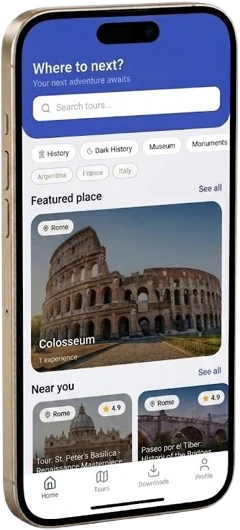
Explore New Orleans with Trevurs
Walking the Quarter is better when someone tells you the stories behind the doors. The free, self-guided Trevurs tour New Orleans: Voodoo, Jazz and America's Most Mixed City takes you through the streets where Creole culture, the voodoo tradition and early jazz took shape. It works offline, so you can use it without burning roaming data. Download it before your trip and listen as you walk.