Naples Travel Guide: Pizza, Underground and the City Everyone Warns You About
The main street of Naples's old town is 2,500 years old, and you can still see its shape from the air. Spaccanapoli ("the street that splits Naples") follows the lower decumanus that Greek settlers laid out when they founded Neapolis around 470 BC. Stand at the top of Castel Sant'Elmo and it cuts the city in a dead straight line, through laundry, scooters and church domes. Most travelers arrive having been warned about Naples. Few are warned that it is one of the oldest continuously inhabited cities in Europe and that its historic center is a UNESCO World Heritage Site.
This guide covers the pizza, the underground, the famous sculpture you have to book weeks ahead, and an honest look at safety in 2026.
Pizza: Where It All Started
Naples didn't just invent pizza, it got the art of the pizzaiuolo listed by UNESCO as intangible heritage in 2017. The story everyone repeats: in 1889 pizzaiolo Raffaele Esposito made a pie in the colors of the Italian flag for Queen Margherita of Savoy. Whether or not it happened exactly like that, the margherita is the benchmark here, and it is still cheap: expect roughly €5 to €10 for a classic in the old town (check current menus, prices have crept up).
- L'Antica Pizzeria da Michele (Via Cesare Sersale, Forcella): open since 1870 and famous for a tiny menu built around margherita and marinara. Take a numbered ticket at the door and wait outside. Lines move faster than they look.
- Sorbillo (Via dei Tribunali): Gino Sorbillo's family pizzeria on the old town's busiest food street. Huge, thin-centered pizzas with a puffy cornicione. Arrive before opening or expect a queue.
- Starita (Materdei): in business since 1901 and the place for pizza fritta, a deep-fried folded pizza stuffed with ricotta, provola and salami. Sophia Loren sold fried pizza on screen in L'oro di Napoli (1954), and Starita leans into the connection.
- Pizza a portafoglio: a small pizza folded in four "like a wallet" and eaten while walking. Many old-town pizzerias sell it from a street window for a couple of euros. It is the best cheap lunch in Italy.
Save room for a sfogliatella (crisp shell pastry with ricotta and orange) and a rum-soaked babà. And if you see a sign for caffè sospeso, that's the Neapolitan custom of paying for an extra coffee for someone who can't afford one.
Spaccanapoli and San Gregorio Armeno
Walk Spaccanapoli from Piazza del Gesù Nuovo, with the diamond-studded facade of the Gesù Nuovo church, east toward Forcella. In 1.5 km you pass Santa Chiara's majolica cloister, Piazza San Domenico Maggiore and street shrines on every corner. It is narrow, loud and alive: allow two to three hours if you stop.
Turn north onto Via San Gregorio Armeno, the nativity street. Workshops here carve and paint presepe figurines all year, from shepherds and fish sellers to footballers, politicians and celebrities of the moment. It is packed in November and December; go on a weekday morning if you want to actually see the craftsmen at work.
The Veiled Christ (Book Ahead)
The Cappella Sansevero holds the Cristo Velato, carved by Giuseppe Sanmartino in 1753. The marble veil over the dead Christ is so thin you can see the wounds and veins through it, and for two centuries people whispered that the prince who commissioned it, the alchemist Raimondo di Sangro, had turned real fabric into stone. Downstairs, two "anatomical machines" (skeletons with their circulatory systems preserved) only add to the legend.
Practical: entry is around €12 for adults with reductions for young people, by timed ticket booked online. Slots sell out days ahead in high season, so book as soon as your dates are fixed. Photos aren't allowed inside. The visit takes about 30 to 40 minutes.
Napoli Sotterranea: The City Below
About 40 meters under Via dei Tribunali is another Naples. Napoli Sotterranea (entrance at Piazza San Gaetano) leads you through Greek quarries, Roman cisterns that fed the city's water supply for centuries and the tunnels Neapolitans used as bomb shelters in World War II. Part of the tour enters a basso (ground-floor home) whose cellar hides the remains of the Roman theater where Nero performed.
Guided tours run several times a day in English and Italian, last about 90 minutes and cost around €15 (verify on the official site before going). One stretch is a very narrow candlelit passage; skip it if you're claustrophobic, the guides offer a way around. Wear shoes with grip, and bring a layer: it stays cool year-round.
Quartieri Spagnoli and Maradona
West of Via Toledo, the Quartieri Spagnoli grid was built in the 16th century to house Spanish troops. For decades it was the neighborhood guidebooks told you to avoid. Today it's busy with trattorias, B&Bs and visitors heading for the Maradona mural on Via Emanuele De Deo, now a full shrine (Largo Maradona) with candles, scarves and murals covering every wall. Diego won Napoli its first two league titles in 1987 and 1990, and the city never forgot: the stadium carries his name since 2020, and when Napoli won again in 2023 and 2025, the streets turned blue for weeks.
Go during the day, eat a frittatina (fried pasta) from a corner stall, and keep an eye on scooters in the alleys.
Is Naples Safe in 2026?
Honestly: about as safe as other large Italian cities, with a few specific habits that help.
- Pickpockets work Piazza Garibaldi, the central station, the Circumvesuviana train and crowded buses. Front pocket for your phone, zipped bag in front.
- Phone and watch snatching from scooters happens less than the stories suggest, but don't walk along the curb holding your phone out, and leave expensive watches at the hotel.
- Taxis: use official white cabs and ask for the fixed fares (tariffa predeterminata) from the airport and station.
- At night, the old town, Chiaia and the seafront are busy and fine. Quiet back alleys around the station are where you shouldn't wander after midnight.
Most visitors leave saying the warnings were wildly overblown. The traffic is more dangerous than the crime.
Getting Around: Metro Line 1 and Toledo Station
The center is walkable, but Metro Line 1 links the station (Garibaldi), the university, the old town, Toledo, Dante and the Vomero hill. It accepts contactless cards at the gates; a single ride is roughly €1.50 to €1.80 depending on the ticket type (check the ANM site). Even if you don't need it, go down to Toledo station, designed by Óscar Tusquets: a blue mosaic "crater" of light that keeps topping lists of Europe's most beautiful metro stops. From the airport, the Alibus shuttle costs around €5.
Day Trips: Pompeii and Herculaneum
The Circumvesuviana train reaches both ruins in 20 to 40 minutes. Pompeii needs most of a day. Herculaneum is smaller, better preserved (wooden furniture and upper floors survived) and far less crowded: a perfect half day. Do one, ideally both, but don't try to squeeze them into the same afternoon as the old town.
Explore Naples with Trevurs
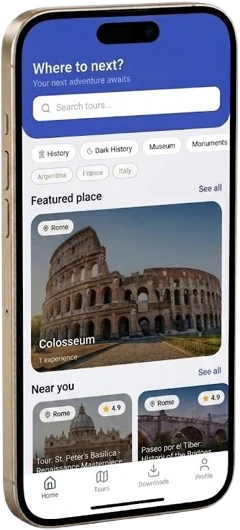
Trevurs is a free app of self-guided audio tours that work offline, so you can walk the old town without a guide or data. In Naples, start with Naples: Vesuvius, Pizza and the City Underground, which strings together Spaccanapoli, the pizza history and the stories under your feet. For day trips, download Pompeii: One Day Before the End and Herculaneum: the Town Pompeii Overshadowed, Better Preserved and Less Visited before you board the Circumvesuviana.