Matera and Lecce: Southern Italy's Two Most Surprising Cities
In 1950, Italy's prime minister Alcide De Gasperi walked through the Sassi of Matera and called them a "national disgrace". Around 15,000 people lived in caves carved into the limestone, often sharing a single room with their mule and chickens, with no running water and child mortality close to 50 percent. A special law in 1952 emptied the caves and moved families into new housing on the plateau. Four decades later, in 1993, UNESCO declared those same caves World Heritage. In 2019 Matera was European Capital of Culture, and today people pay to sleep in the rooms their grandparents were forced to leave.
Three hours to the southeast, Lecce tells the opposite story. It is a wealthy city that spent the 17th century decorating itself with so much carved stone that people call it "the Florence of the South". The secret is the pietra leccese, a local limestone so soft when quarried that sculptors could work it almost like wood, and that hardens and turns golden with time.
Put them together and you get the best short trip in southern Italy: one city dug into rock, one city carved out of it. Here is how to do it.
Matera: Walking the Sassi
Matera sits on the edge of a deep ravine, the Gravina. The old town is split into two cave districts: the Sasso Barisano to the north and the Sasso Caveoso to the south, with the Civita hill and the Romanesque cathedral rising between them. Walking the Sassi is free. You just need comfortable shoes, because everything is stairs.
What not to miss:
- Casa Grotta di Vico Solitario: a cave house furnished as it was before the evacuation, with the bed raised above the animals' corner. A few euros, and the best 20 minutes you will spend in Matera.
- Rock churches: Santa Maria de Idris, perched on a rock spur in the Sasso Caveoso, and San Pietro Barisano have frescoes painted directly onto the stone. They are part of a paid circuit, so check current prices at the entrance.
- Palombaro Lungo: a huge underground cistern under Piazza Vittorio Veneto. It shows how Matera survived for centuries by collecting every drop of rain.
- Belvedere di Murgia Timone: the viewpoint on the other side of the Gravina, with prehistoric caves and the classic panorama of the Sassi. Go at sunset and stay for the lights.
If the scenery looks familiar, it is because filmmakers love it. Mel Gibson shot The Passion of the Christ here, and the opening chase of the Bond film No Time to Die races across the Sassi.
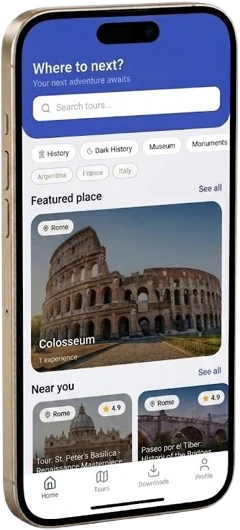
Trevurs has a free audio tour for this: "Matera: the Cave City That Went from National Disgrace to World Heritage". It takes you through both Sassi and explains how a place of misery became one of the most photographed towns in Italy.
Lecce: the Baroque Capital of the Salento
Lecce sits in the heel of the boot, in the Salento peninsula, and it is a city for slow walking. Start in Piazza Sant'Oronzo, where half of a Roman amphitheater from the 2nd century AD sits below street level. It was only found in 1901, when workers were digging the foundations for a bank.
From there, walk to the Basilica di Santa Croce. Its facade took more than a century to finish and is covered with cherubs, dragons, fruit, griffins and bearded figures. Five minutes away, Piazza del Duomo is a closed square that feels like a stage set, with a 70-meter bell tower. Most of the main churches are on a combined ticket (LeccEcclesiae) that has cost around 9 to 11 euros; verify the current price before you go.
Look out for the cartapesta (papier-mâché) workshops. Lecce's craftsmen have made religious statues from paper, straw and glue since the 17th century, and some still work in the historic center.
The free Trevurs tour "Lecce: the City Carved from Stone as Soft as Wood" follows that route and tells you who paid for all that stone and why.
How to Get There
This is the part most guides skip, and it matters.
- Matera has no Trenitalia station. The town is in Basilicata, but its nearest airport and hub is Bari, in Puglia. From Bari Centrale, take the regional FAL (Ferrovie Appulo Lucane) line from its own station next to the main one. The trip takes roughly 1.5 to 2.5 hours, some services require a change in Altamura, and tickets have been around 5 euros. Service is reduced on Sundays and holidays, so check the FAL timetable before you go.
- Buses: there are direct coaches from Bari airport and Bari city to Matera, usually faster than the train. Check the current operators and times when you book.
- Lecce is on the main rail line. Frecciarossa and Frecciargento trains run direct from Rome in around 5.5 to 6 hours, and regional and high-speed trains link Bari and Lecce in about 1.5 to 2 hours. Brindisi airport is about 40 km away, with buses into the city.
- Matera to Lecce: about 200 km. By car it takes around 2.5 hours. By public transport you go back through Bari, so count on 4 hours or more.
If you want to add the Puglia extras below, rent a car. Public transport works between the big towns, but villages and beaches are much easier on four wheels.
How Many Days?
- Matera: 2 nights. Arrive in the afternoon, see the sunset from Murgia Timone, walk the Sassi the next morning before the day-trippers arrive, and go back at night when the caves light up.
- Lecce: 2 nights, or 3 if you want a day on the coast.
- The ideal trip: 5 to 7 days, starting in Bari and ending in Lecce (or the other way round), with stops in between.
Where to Sleep: a Cave Hotel
In Matera, sleep in the Sassi. Many former cave homes are now hotels and B&Bs, from simple rooms carved into the rock to luxury suites with candlelight and stone baths, like Sextantio Le Grotte della Civita. Prices vary a lot by season: expect roughly 100 euros a night for a simple cave room and several hundred for the top places. Two warnings: cars cannot enter most of the Sassi, so ask your hotel where to park and how far you will carry your bag, and caves can be humid, so read recent reviews.
In Lecce, stay inside the historic center, within the old city gates. Everything is walkable and the streets are beautiful at night.
Puglia Extras on the Way
- Alberobello: the town of the trulli, white houses with conical stone roofs, UNESCO-listed since 1996. About an hour from Matera by car. Go early or late: midday is packed.
- Polignano a Mare: a town on a cliff, with the Lama Monachile cove squeezed between the rocks. Perfect stop between Bari and Lecce.
- Otranto: 45 minutes from Lecce, with a whitewashed old town, turquoise water and a cathedral with an enormous 12th-century floor mosaic (and a chapel with the bones of the 800 martyrs killed in 1480).
What to Eat
- Pane di Matera: a durum wheat bread with a crunchy crust and a shape like a horn. It has IGP status, and locals swear it stays good for a week.
- Peperoni cruschi: sweet dried peppers fried until crisp, crumbled over pasta or eaten like chips.
- Crapiata: a hearty soup of legumes and grains, a peasant dish from the cave days.
- Pasticciotto: Lecce's signature pastry, shortcrust filled with warm custard. Eat it for breakfast.
- Rustico leccese: two discs of puff pastry filled with béchamel, mozzarella and tomato. The perfect snack between churches.
- Caffè in ghiaccio con latte di mandorla: espresso over ice with almond milk syrup, the drink of a Salento summer.
Explore Matera and Lecce with Trevurs
These are two cities where the stone tells the story, and the story is better with someone explaining it. Download Trevurs and walk "Matera: the Cave City That Went from National Disgrace to World Heritage" and "Lecce: the City Carved from Stone as Soft as Wood" at your own pace. Both tours are free, self-guided and work offline, which helps in the Sassi, where the signal disappears between the rock walls.