Palma de Mallorca Travel Guide: Cathedral, Old Town and Beyond the Beach
Twice a year, on November 11 and February 2, something odd happens inside Palma's cathedral. Around 8:30 in the morning the low winter sun hits the huge rose window above the altar and projects it, in full color, onto the wall right under the opposite rose window. For a few minutes the two windows stack up like a figure eight made of light. Locals call it the Festa de la Llum.
That sums up Palma pretty well. Most of the people landing at Son Sant Joan head straight for a sunbed, but the capital of Mallorca has a Gothic cathedral facing the sea, a Moorish palace still used by the Spanish royal family, a round castle on a hill and an old town full of hidden courtyards. This guide covers what to see, what it costs in 2026, two easy day trips, and how to visit without adding to the island's growing headache with mass tourism.
La Seu: the Cathedral on the Sea
The Cathedral of Santa María, known simply as La Seu, exists because of a storm. In 1229 King James I of Aragon sailed to conquer Mallorca from its Muslim rulers, hit bad weather and promised to build a church to the Virgin if he made it. He did, and construction started on the site of the main mosque. It took almost four centuries to finish.
What you get today is one of the tallest Gothic naves in Europe (about 44 meters) and one of the largest Gothic rose windows anywhere, more than 12 meters across. But two modern artists are what make La Seu different from every other cathedral on your list:
- Antoni Gaudí worked here between 1904 and 1914, before the Sagrada Família took over his life. He moved the choir stalls out of the center of the nave so you could actually see the altar, opened up the light and hung the strange canopy (baldachin) over the altar, a crown of iron, lamps and cloth that he never fully finished.
- Miquel Barceló, Mallorca's most famous living artist, covered the Chapel of the Blessed Sacrament (Sant Pere) with roughly 300 square meters of ceramic: fish, fruit, bread and a Christ emerging from the clay. It opened in 2007 and people either love it or hate it. Go and decide.
Tickets 2026: basic entry (cathedral plus museum) is around €10 online, a bit more at the door. The combined ticket with the rooftop terraces costs about €25 and is worth it: you walk above the flying buttresses with the bay at your feet. Terraces run from spring to November, in timed groups every 30 minutes. Opening hours change by season and the cathedral closes to visitors on Sundays except for mass, so check catedraldemallorca.org before you go.
The classic photo is from Parc de la Mar, the park and saltwater lake below the cathedral walls. Come at sunset when the stone turns pink and the lake reflects it.
Palacio de la Almudaina
Right next to the cathedral sits the Royal Palace of La Almudaina, built on the old Moorish alcázar and later the residence of the Kings of Mallorca. It is still the official residence of the Spanish king when he is on the island, used for receptions and ceremonies.
The palace closed for an overhaul in early 2026 and reopened on July 29, 2026 with a longer route and rooms that were not open before. Tickets are sold by Patrimonio Nacional; in recent years the self guided ticket was around €7, but check the official site for the 2026 price. It is closed on Mondays and the visit takes about 45 minutes.
The Old Town and Its Patios
The best part of Palma is free. Walk from the cathedral into the lanes of the Barri del Calatrava and around Santa Eulàlia and Sant Francesc. Look for open doors: behind many of these stone facades are patios, courtyards with grand staircases, columns and plants, built by noble families from the 16th to 18th centuries. Can Vivot, on Carrer de Can Savellà, is the most famous.
Other stops on the same walk:
- Banys Àrabs: a small 10th or 11th century bathhouse with a garden, one of the few Moorish buildings left. Entry is a few euros.
- Passeig des Born and Sa Llotja: the old merchants' exchange, a jewel of civil Gothic, right by the port bars.
Bellver Castle
About 3 km west of the center, on a pine covered hill, stands Castell de Bellver, built in the early 14th century for King James II of Mallorca. It is circular, which is rare in Europe, with a round courtyard and a tower connected by a bridge. Go for the view from the roof over the whole bay.
Entry is cheap (around €4, free on Sundays), and it closes on Mondays in the low season. You can walk up through the woods in about 30 minutes from the Passeig Marítim, or take a taxi up and walk down.
Ensaimada: What to Eat
The ensaimada is Mallorca's spiral pastry, made with saïm (pork lard), which is where the name comes from. It has had protected geographical status since 2003. Try one plain or with cabello de ángel (pumpkin jam) at Ca'n Joan de s'Aigo, a café going since 1700, with hot chocolate. You will see people at the airport carrying the big flat octagonal boxes home; you can do the same.
Also try sobrasada (spreadable sausage) and pa amb oli (bread with olive oil and tomato).
Day Trip 1: The Sóller Train
The Ferrocarril de Sóller opened in 1912 and still runs its original wooden carriages 27 km through the Serra de Tramuntana, with 13 tunnels and a viewpoint stop above the valley. The ride takes about an hour from Plaça d'Espanya.
Prices 2026: around €23 one way and €30 return from Palma; add the vintage tram down to Port de Sóller for roughly €7 each way. It fills up in summer: take the first departure. Money saving trick: take the TIB bus one way (much cheaper and faster) and the train the other. Check trendesoller.com for current fares and timetables.
Day Trip 2: Valldemossa
Half an hour from Palma by TIB bus, Valldemossa is a stone village in the mountains. Its Real Cartuja is where Frédéric Chopin and George Sand spent the miserable, rainy winter of 1838 to 1839. Sand wrote a whole book complaining about it (A Winter in Majorca). The cell with Chopin's piano is the main draw. Get a coca de patata, a fluffy potato bun, before you leave.
The Tourist Tax and the Protests
Every visitor over 16 pays the Balearic tourist tax (ecotasa), per person and per night, at check in. In high season (May to October) it ranges from about €1 for hostels to €4 for five star hotels, plus 10% VAT, with a 50% discount from the ninth night and lower rates in winter. A proposal to raise summer rates for 2026 was shelved, but the debate keeps coming back.
That debate has a context. On July 26, 2026, the platform Menys Turisme, Més Vida ("Less tourism, more life") marched through Palma under the slogan "Mallorca al límit". Police counted around 25,000 people; organizers claimed about 70,000. The core issue is housing: rents that local workers cannot afford, partly because of holiday rentals. You will not be treated badly as a visitor. Still, you can help by staying in licensed accommodation, spending in local shops and avoiding July and August.
Best Time to Visit
April to June and late September to October are ideal: 20 to 27 °C, sea warm enough by June, half the crowds and lower prices. November and February are quiet and mild, and they come with the cathedral's light show. July and August are hot, packed and expensive, with cruise ships adding thousands of people to the old town at once.
Explore Palma with Trevurs
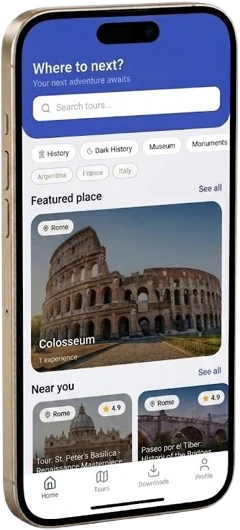
La Seu makes much more sense once you know the king who promised it during a storm. Download Trevurs and walk "Palma: the Island James I Conquered to Rule the Mediterranean" at your own pace: from the old Jewish quarter to the cathedral, the Almudaina, Sa Llotja and Bellver. It is free, self guided and works offline, so you can keep your data for the train to Sóller.