Best Day Trips from Florence: Siena, Pisa, San Gimignano and Chianti
The Leaning Tower of Pisa started tilting in 1178, five years after the first stone was laid, when the builders had only reached the third floor. They stopped, a war got in the way, and the pause of almost a century let the soft clay under the foundations settle. That accident is why you can now take a cheap regional train from Florence, walk across a lawn and stand under the most famous mistake in architecture. Tuscany is built for day trips like that: Siena, Pisa, San Gimignano, Lucca and the Chianti hills all sit between one and two hours from Florence.
The question is never whether to go, but how. Some places work brilliantly by train, some by bus, and one really needs a car. Here is the honest breakdown for 2026.
Quick Comparison
- Pisa: regional train, about 1 hour to 1 h 20 min, around €9 each way. Easiest day trip of all.
- Siena: direct bus about 1 h 15 min, roughly €8 to €9. The train takes about 1 h 30 min for a similar price but drops you below the hill.
- San Gimignano: train or bus to Poggibonsi, then a local bus. Count 1 h 30 min to 2 hours each way.
- Lucca: regional train, about 1 h 20 min to 1 h 45 min, around €8 to €9.
- Chianti: car or organized tour. Public buses exist but are slow and sparse.
Fares on Trenitalia regional trains are fixed, so buying early does not save money. Check timetables in the Trenitalia app or at the station machines, and remember that paper regional tickets must be validated before boarding if they have no fixed time.
Pisa: More Than a Photo With the Tower
Regionale and Regionale Veloce trains leave Firenze Santa Maria Novella several times an hour toward Pisa. Get off at Pisa San Rossore if your train stops there: it is a 10 minute walk from the Piazza dei Miracoli. From Pisa Centrale it is about 25 minutes on foot through the old town, which is actually a nice walk across the Arno.
Climbing the tower costs about €20 per person, with timed entry. Buy on the official site, opapisa.it, ideally a few days ahead in high season, because slots sell out. Bags are not allowed inside (there is a free cloakroom) and children under 8 cannot climb. The ascent is about 250 marble steps worn into a slope, and you feel the lean in your legs. The cathedral is free but also requires a timed ticket, and a combined pass for the Baptistery, Camposanto and museums runs around €27. Verify current prices before you go.
What most visitors skip is the rest of the city. Pisa was a maritime republic that fought Genoa and Venice for the Mediterranean, and the tower was paid for with loot from a naval raid on Palermo. Walk to Piazza dei Cavalieri, then down Borgo Stretto to the river. Two to three hours on the Piazza dei Miracoli plus two in town is enough.
Lucca: Combine It With Pisa
Lucca is only about 30 minutes by train from Pisa, so the classic combo is Pisa in the morning and Lucca in the afternoon, then a direct train back to Florence. Lucca is surrounded by Renaissance walls more than 4 km long, wide enough that they were turned into a tree lined park. Rent a bike near the walls (around €4 to €5 per hour) and ride the full loop in 20 minutes. Then climb the Torre Guinigi, the tower with oak trees growing on top, and walk into the Piazza dell'Anfiteatro, an oval square built on the footprint of a Roman amphitheater.
Siena: Take the Bus, Not the Train
This is the one case where the bus beats the train. Autolinee Toscane runs fast buses from the Florence bus station next to Santa Maria Novella to Siena, Piazza Gramsci, inside the walls, in about 1 h 15 min. The train takes around 1 h 30 min (sometimes with a change in Empoli) and arrives at a station below the city, from where a long chain of escalators carries you up. Both cost roughly €8 to €10 one way; check the current fare when you buy.
Once there, everything flows downhill to the Piazza del Campo, the shell shaped square where the Palio horse race is run every July 2 and August 16. Climb the Torre del Mangia (about 400 steps) for a view over terracotta roofs and hills, then visit the Duomo, whose black and white striped interior and marble floor are among the most striking in Italy. Siena was Florence's great rival for centuries, and every corner still shows it: the city divided into 17 contrade, each with its flag, its fountain and its animal.
Give Siena a full day. If you only have half a day, prioritize the Campo, the Duomo and a slow walk along Via di Città.
San Gimignano: The Medieval Skyline
In the Middle Ages, San Gimignano had around 72 towers, built by rival families competing to show off their wealth. About 14 survive, and from the road they still look like a medieval Manhattan.
Getting there without a car takes some patience. Take a regional train from Florence to Poggibonsi (about 1 hour, around €8), then bus 130 or 133 up to Porta San Giovanni (about 25 minutes). Connections are not always timed, so total travel is usually 1 h 30 min to 2 hours. Buy the bus ticket before boarding.
Three hours is enough: climb the Torre Grossa, eat a gelato in Piazza della Cisterna and taste a glass of Vernaccia di San Gimignano, the local white wine. Go early or stay late, since midday brings the tour buses.
Chianti: Rent a Car or Book a Tour
The Chianti hills between Florence and Siena are the image of Tuscany everyone has in mind: cypress lines, vineyards and stone villages like Greve, Panzano, Castellina and Radda. Buses do reach Greve, but reaching wineries that way is impractical.
- By car: follow the SR222, the Chiantigiana, from Florence to Siena. It is about 70 km of curves, so plan a slow day. Pick up the car outside the historic center, because Florence's ZTL cameras fine any unauthorized car that enters. The legal blood alcohol limit in Italy is 0.5 g/l, and only one person should be tasting.
- By tour: a group wine tour from Florence typically includes two wineries and a lunch. It is the easiest way to drink without worrying about the drive back.
Look for the black rooster on the bottle neck: that logo marks Chianti Classico, from the historic core of the region.
Smart Combos
- Pisa + Lucca: the best one day combo by train. Start early in Pisa, move to Lucca after lunch.
- Siena + San Gimignano: too much for public transport in one day. By car or on a tour, it works well, with Chianti stops along the way.
- Siena alone: worth a full day by bus, especially if you want to see the Duomo properly.
- Chianti + San Gimignano: a classic car loop, about 9 hours door to door.
Avoid Mondays for museums in smaller towns, and in July and August start before 9 a.m. to beat the heat.
Explore Tuscany with Trevurs
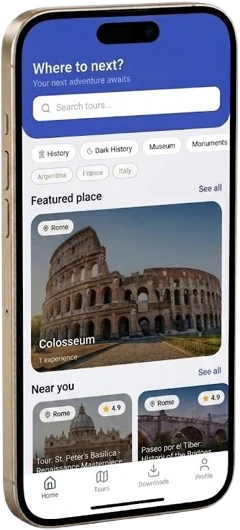
Trevurs has free self guided audio tours for two of these day trips. In Pisa, "Pisa: the Leaning Tower of a Sea Power the Sea Abandoned" takes you from the Piazza dei Miracoli into the story of the maritime republic. In Siena, "Siena: the Palio, the Contrade and the Republic That Stood Up to Florence" walks you through the Campo and the city of the seventeen contrade. Back in Florence, try "The Medici: Money, Art and Poison" or "Florence: Dante and the City He Sent to Hell". Download them before you leave: they work offline, so you will not depend on roaming on the train.