Asunción Travel Guide: South America's Most Underrated Capital
Asunción was founded on August 15, 1537, which makes it one of the oldest cities in South America. Spaniards later launched expeditions from here to found Buenos Aires for the second time, which is why Paraguayans call it the "Mother of Cities". It is also one of the cheapest and least crowded capitals on the continent, and almost nobody puts it on an itinerary. That is exactly the point.
How many days do you need?
Two days cover the historic center and the best food. Add a third if you want a day trip to San Bernardino, Aregua or the Jesuit missions further south. The city is hot and humid from November to March (often above 35 °C), so the most comfortable months are roughly April to September.
Getting there and getting around
Silvio Pettirossi International Airport (ASU) is about 15 km from downtown. Recent guides quote roughly 120,000 to 180,000 guaraníes (about USD 18 to 25) for an official taxi, and the fare is not metered, so agree on the price first or buy it at the counter inside arrivals. Uber and Bolt are usually cheaper, but airport pickup can be inconsistent. Bus line 30-A is the budget option (a few thousand guaraníes), but it is slow and crowded. Prices change, so verify before you go.
Downtown is walkable in the morning and miserable at 3 pm in summer. Use ride-hailing for longer hops, and carry some cash in guaraníes: many small places do not take cards. Check the current rate before you travel.
The historic center on foot
Start at the Palacio de los López, the white neoclassical palace on the river. Construction began under Carlos Antonio López in the 1850s and it was finished after the War of the Triple Alliance. It is still a government building, so interior access is limited and you will mostly photograph it from the gardens. Verify tours with the official channels before you plan around one.
Walk a few blocks to the Panteón Nacional de los Héroes, a small domed building that holds the remains of national figures, including Francisco Solano López. Most sources list it as free, open Tuesday to Sunday from early morning to late afternoon, with a free guide on weekday mornings. Hours vary by source and it can partly close during ceremonies, so check ahead.
Then wander the Plaza de los Héroes, the Cabildo (the old colonial town hall, now a cultural center) and the Catedral Metropolitana. Nearby, the Casa de la Independencia, one of the few colonial houses left, is where the 1811 independence plot was hatched. Entrance is usually free or very cheap.
What to eat
Paraguayan food is built on corn, cassava and cheese. Order these:
- Chipa: a cheesy, dense bread made with cassava starch, sold hot on the street and at bus stops. The best one is the one that just came out of the oven.
- Sopa paraguaya: despite the name, a solid cornbread with cheese and onion.
- Mbejú: a toasted cassava and cheese pancake.
- Asado and mandioca: grilled beef with boiled cassava, the national default.
- Tereré: cold yerba mate with ice and herbs. You will see people carrying a thermos and a guampa (cup) everywhere, and you will be offered some. Accept.
Lunch at a local comedor often costs a fraction of what you would pay in Buenos Aires or Santiago.
Where to stay
Most visitors stay in the Centro for walkability or in Villa Morra / Carmelitas, the modern district with restaurants, malls and better nightlife. Villa Morra feels safer after dark. Both are well served by ride-hailing.
Safety and practical tips
- Asunción is generally fine for travelers by day. Use common sense with phones and bags, and avoid empty streets at night. Take a ride-hailing car instead of walking late.
- Bring repellent. Dengue is a seasonal concern in the warm months.
- The riverside Costanera is pleasant at sunset, but it is not the place to wander alone late at night.
- Most museums and churches close in the afternoon siesta. Do your sightseeing before 1 pm.
- Many places close on Sundays, apart from the main attractions.
Day trips
San Bernardino is a lakeside resort town about an hour away, and Aregua is a small town known for ceramics and Lake Ypacarai views. For something bigger, the Jesuit missions of Trinidad and Jesús are a long day trip or an overnight stay.
Why it deserves a visit
Asunción is not polished, and that is part of the appeal. You get colonial streets, a heavy and tragic history (the War of the Triple Alliance wiped out a huge share of the country's population), and a food culture most travelers have never tried. It is a capital you can enjoy slowly.
Explore Asunción with Trevurs
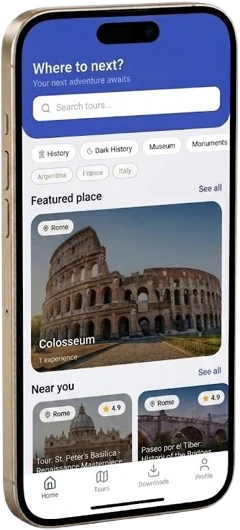
Trevurs has two free, self-guided audio tours for Asunción that work offline: The Mother of Cities: the capital that founded the Río de la Plata (the story of the city's founding and its role in the colony) and The War of the Triple Alliance: The Genocide That Nearly Erased Paraguay (the conflict that shaped modern Paraguay). Download them before you walk out the door and let the stories fill in what the buildings do not say.