2 Weeks in Japan: Tokyo, Kyoto, Osaka, Hiroshima and Beyond
The bullet train from Tokyo to Kyoto covers 476 km in about two hours and fifteen minutes, and the average delay per train across a whole year is usually around one minute, typhoons included. That single fact shapes every good two-week Japan itinerary: distances look big on the map, but moving between cities is so fast and predictable that you can change base four or five times without wasting days. The trick is not to overdo it.
This is the classic route that works for most first-timers: Tokyo, Hakone, Kyoto, Nara, Osaka, Himeji, Hiroshima and Miyajima, with two variants at the end (Japanese Alps and Kyushu) if you want to swap a few days.
The Route at a Glance
- Days 1 to 5: Tokyo, with a day trip to Kamakura or Nikko
- Day 6: Hakone and Mount Fuji views, night in a ryokan
- Days 7 to 10: Kyoto, with a day trip to Nara
- Days 11 and 12: Osaka, with a stop in Himeji
- Day 13: Hiroshima and Miyajima
- Day 14: Fly out of Osaka (Kansai) or ride the train back to Tokyo
Pro tip: book an "open jaw" flight, arriving at Tokyo (Haneda or Narita) and leaving from Kansai (KIX). It saves you a 3 to 4 hour backtrack on the last day.
Days 1 to 5: Tokyo
Give Tokyo at least four nights. Keep day one light because of jet lag: buy a rechargeable IC card (Suica or Pasmo, in your phone wallet) and eat at a convenience store, which in Japan is a legitimate culinary experience.
Day 2: Old Tokyo. Start early in Asakusa, before the crowds reach Senso-ji. Walk to the Sumida River, then cross to the Imperial Palace East Gardens, where the foundations of Edo Castle are still there. Two Trevurs tours cover this exactly: Asakusa: the District That Burned Twice and Opened Again on Monday and Edo: the City of a Million People Europe Didn't Know Existed.
Day 3: Modern Tokyo. Meiji Jingu in the morning, Harajuku and Omotesando, then Shibuya Crossing at dusk. The Meiji Era: the Country That Reinvented Itself in One Generation tour explains why a forest shrine sits next to the most fashionable street in the country.
Day 4: Pick your obsession. Akihabara for anime and retro games (Akihabara: From Black-Market Radios to the Manga That Conquered the World) or Sengakuji temple for the samurai legend (The 47 Ronin: Japan's Most Famous Revenge and What It Says About Honour).
Day 5: Day trip. Kamakura is one hour by train and has the Great Buddha plus a handful of Zen temples (Kamakura: the City Where the Samurai Took Power From the Emperor). Nikko is about two hours away and has the most lavish shrine in Japan (Nikko: the Mausoleum That Turned a Shogun Into a God). Pick one.
Day 6: Hakone
Hakone is the classic Fuji stop: a loop of mountain train, cable car over the volcanic valley of Owakudani, pirate ship across Lake Ashi and an old stretch of the Tokaido road. The Hakone Free Pass from Shinjuku covers almost all of it. Sleep in a ryokan with an onsen at least once on this trip, and this is the place to do it.
Fuji hides behind clouds most days, especially in summer. Your best odds are early mornings from November to February. The Trevurs tour Hakone: Mount Fuji, the Tokaido and the Barrier That Watched the Shogun's Travellers walks you through the old checkpoint.
Luggage tip: ship your suitcase from Tokyo to Kyoto with a takkyubin service (around 2,000 to 3,000 yen per bag).
Days 7 to 10: Kyoto
From Odawara (the Hakone gateway), the Shinkansen gets you to Kyoto in about two hours. Kyoto deserves four nights because its best moments happen early in the morning, before the tour buses arrive.
- Day 7: Fushimi Inari at sunrise, then Gion in the late afternoon. Remember that photographing geiko and maiko in the private alleys is banned and fined. Take the Gion: the Closed World of the Geisha That Survived the Twentieth Century tour to understand what you are seeing.
- Day 8: Higashiyama on foot (Kiyomizu-dera, Sannenzaka, Yasaka), then the Zen gardens: Ryoan-ji and Kinkaku-ji in the north-west. The Kyoto Zen: Fifteen Stones No One Can See at Once tour is built around this.
- Day 9: Nara day trip, 45 minutes by train: Todai-ji, the bowing deer and Kasuga Taisha (Nara: the First Capital, the Giant Buddha and the Deer Who Stayed).
- Day 10: Arashiyama at 7 a.m. for the bamboo grove, then downtown: Nishiki Market and the samurai story of the city (Kyoto: The Samurai and the Japan That Almost Vanished and Honno-ji: the Dawn They Betrayed the Man Who Was About to Unify Japan).
Days 11 and 12: Himeji and Osaka
On the way from Kyoto to Osaka, detour west to Himeji: the white castle is 40 minutes from Shin-Osaka by Shinkansen and is the best preserved original castle in Japan. Since March 2026, adults who don't live in Himeji pay 2,500 yen, so budget for it. Do the Himeji: the White Castle Designed So No One Could Reach the Keep tour, then continue to Osaka for the night.
Osaka is about eating. Dotonbori at night, Kuromon Market, Shinsekai for kushikatsu, and the castle by day (Osaka: the Castle of the Peasant Who Came to Rule Japan).
Day 13: Hiroshima and Miyajima
Leave Osaka early: Hiroshima is about 1 hour 20 minutes by Shinkansen. Spend the morning at the Peace Memorial Park and Museum (8:15 AM, August 6, 1945 and Hibakusha: Those Who Survived the Bomb and Then Had to Survive the Silence), then take the train and the JR ferry to Miyajima. Check the tide tables: at low tide you can walk to the floating torii. There is a 100 yen visitor tax on the island (Miyajima: the Island So Sacred No One Could Be Born or Die There).
Variant 1: The Japanese Alps (Kanazawa and Matsumoto)
Swap Hakone and one Tokyo day for the mountains. From Tokyo, take the train to Matsumoto (around 2 hours 40 minutes), home of the black "crow castle" (Matsumoto: the Crow Castle That Survived the Auction and the Lean). Continue to Kanazawa via Nagano and the Hokuriku Shinkansen, with Kenroku-en garden and the geisha and samurai districts (Kanazawa: the City of Gold and Samurai That the Bombs Never Touched). From Kanazawa, a limited express train plus the Shinkansen leave you in Kyoto in about two hours.
Variant 2: Kyushu (Fukuoka and Nagasaki)
If you skip the day trip from Tokyo, extend south after Hiroshima: Fukuoka is one hour away by Shinkansen and has the best ramen stalls in Japan (Fukuoka: Japan's Front Door, Where the Mongols Nearly Came In). Nagasaki is about 1 hour 30 minutes more, with the Dejima trading post and the Atomic Bomb Museum (Nagasaki: Japan's Window on the World and the Bomb That Fell Because of a Cloud). Fly home from Fukuoka.
Is the Japan Rail Pass Worth It for This Route?
Usually not anymore. After the 2023 price hike, and with a new increase from October 2026 (around 53,000 yen for 7 days and 84,000 yen for 14 days, check the official site), the classic route above costs less with individual Shinkansen tickets: roughly 14,000 yen Tokyo to Kyoto, around 10,000 yen Osaka to Hiroshima and under 20,000 yen Hiroshima back to Tokyo. Do the math with the JR fare calculator before you buy, and look at regional passes (Kansai, Hokuriku) for the variants.
Practical Notes
- Best seasons: late March to early April for cherry blossoms, November for autumn leaves. Both are crowded and expensive, so book hotels months ahead.
- Departure tax: since July 2026 it is 3,000 yen, usually already included in your flight.
Explore Japan with Trevurs
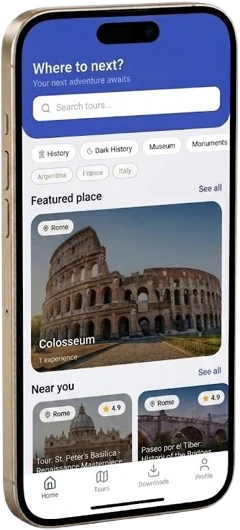
Trevurs has free, self-guided audio tours in almost every stop of this itinerary: Tokyo, Kamakura, Nikko, Hakone, Kyoto, Nara, Osaka, Himeji, Hiroshima and Miyajima, plus Kanazawa, Matsumoto, Fukuoka and Nagasaki for the variants. Download them before you go and they work without a connection, which is perfect for the Shinkansen and the temples where the signal disappears.